When working with daily life scenarios, it’s easy to forget how complex our environments usually are. Maybe it’s something that isn’t as noticeable in a city setting, but whenever we roam outside in the countryside we can inmediately find all sorts of different landscapes composed of a million different elements. To recreate them, we have usually simplified them or focused our attention on the parts that were easier to depict.
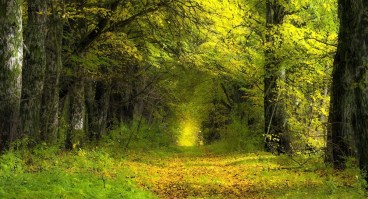
Nevertheless, there are stories and meaning to be found in the details that make up nature. The little pebbles on the side of a country road, the leaves at the side of a curb, the hundreds of little sticks that make up a muddy road… They are all a part of a bigger picture, a fraction of what we just comprehend as a whole – but one that makes life a little richer and nicer to look at.
In both the Archviz and the Games Industry – although more noticeable in the latter one – whenever we have to recreate a particular scene where there’s that kind of complexity involved, we usually rely on tricks to grant our creations the mood we’re after. For example, maybe by placing a picture at the background and rendering our 3d elemets against it we can create the illusion of being in a realistic environment. In a videogame, if we aim for a photorrealistic result we might end up using plain textures for our scenery, which when seen in movement can trick our minds.
In spite of this, we’ve relied on those tricks to try to cheat the eye and the mind. Therefore, difficult-to-recreate elements of a scene are not put at the forefront, but instead towards a less noticeable position. Not very often can we come across a piece of digital art where the elements of nature are their protagonists. However, in recent times there’s a new and promising technique which lets us render all the detail we want while not setting our computers on fire at the same time: it’s called real displacement textures.
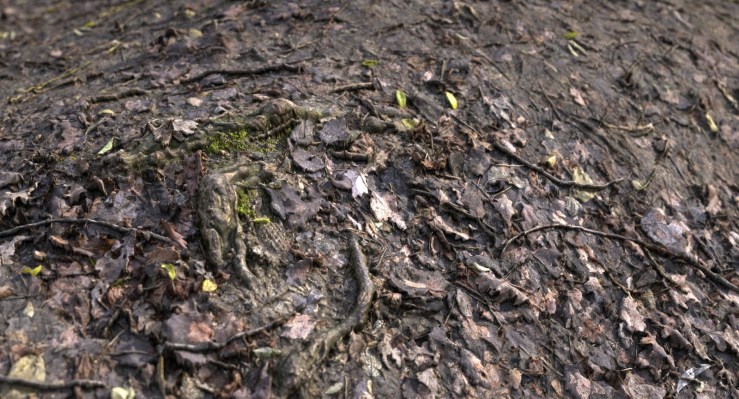
In a few words, we can capture a lot of the detail seen anywhere around us with some texture maps, without having to rely on geometry. This is an important feature, since heavy polygon counts in our videogames or 3d visualization projects usually lead to longer render times. Even though we’ve seen displacement maps in the past, this new implementation makes an enormous impact on both industries. Not only does it allow to allocate a higher number of details into our worlds, but it also reduces the time we would have to spend modelling the miriad of different geometries that would make up our scene.
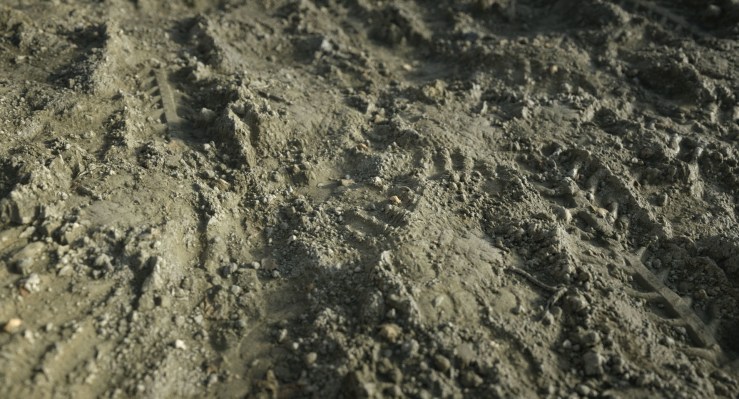
So that’s our plan ahead! To recreate some of this textures and environments and put them to good use. It’s kind of like an adventure, since the process takes several steps – but it’s one where the results speak for themselves. And we’ll go through them one by one. See you on the next post!
 Brais Brenlla